
Backspin Games: Earn Money
Backspin Games SLCasual
4.51.65K Reviews
- Version
- 1.3.3
- Installs
- 500.00K
- Age Rating
- Mature 17+
Screenshots
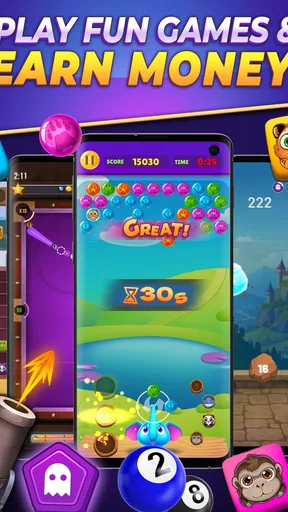


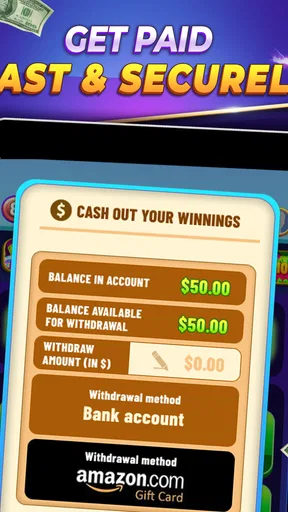
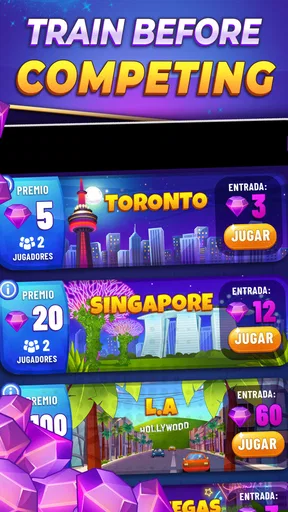
Our Review of Backspin Games: Earn Money
 Analysis by Appyee
I approached Backspin Games: Earn Money as a casual game first, not as a financial tool, and that distinction shaped my whole experience. Its central appeal is the chance to play against real opponents while competing for real prizes, but the more interesting question is whether the moment-to-moment play feels enjoyable enough without treating the reward as the only reason to open it.
My first impression was of a game built around quick decisions and immediate competition. It is easy to understand why the concept attracts attention: instead of playing entirely against computer-controlled opponents or chasing an abstract high score, I am placed in a contest where another person is part of the experience. That gives even a short session more tension than a typical casual game, because every move feels connected to someone else’s response.
Backspin Games SL released the game on May 8, 2025, and it is available free of charge. It has already passed half a million installs, with an average rating of 4.5 from roughly 9,300 ratings and about 1,600 written reviews. Those figures suggest that the idea has found a real audience, although they should not be mistaken for a guarantee that every player will enjoy the competitive format.
How the game turns a simple contest into a mood
I look at the game’s atmosphere as more than decoration: it sets expectations for how focused a contest will feel and helps me decide whether I’m in the right mood to play. A useful habit is to notice whether the tension is making each decision enjoyable or simply raising the stakes in my head. That distinction leads naturally to the question of which players are likely to enjoy this kind of competition most.
A first impression built around short competitive sessions
The strongest early impression comes from the contrast between casual presentation and meaningful stakes. The game does not need a complicated story to make a match feel important. The opponent, the limited time of a session, and the possibility of earning a prize create the drama. I found that this makes the game easier to pick up than a larger competitive title, especially when I only have a few minutes available.
That convenience also changes how I think about progression. In many casual games, a session is successful if it fills a short break. Here, I naturally start judging a round by more than entertainment: was my decision sensible, did I react quickly enough, and did I manage the risk properly? That extra layer can be exciting, but it also means the game is less relaxing than a purely offline puzzle or an endless runner.
A realistic use case is a commute or a short wait before an appointment. I can imagine opening it for one focused contest rather than committing to a long campaign. It suits players who prefer a compact challenge with a clear opponent. It is less suitable for someone who wants a calm game that can be played absent-mindedly while watching television, because the competitive context encourages more attention.
The visual language keeps the idea approachable
The art direction works best when it avoids making the experience feel heavier than it is. A prize-based contest could easily be presented with an overly aggressive tone, but the casual identity gives the game a more approachable surface. The setting is defined less by elaborate world-building and more by the feeling of entering a contained match, making a decision, and seeing how it turns out.
I appreciate that this kind of presentation leaves room for the mechanics to lead. The visual language has a practical job: it should make the current contest understandable, keep important actions readable, and maintain enough energy to make another round tempting. When a casual game introduces too many decorative layers, I usually feel that the interface is competing with the play. Here, the concept benefits from staying focused on the contest itself.
That focus creates a particular mood: brisk, alert, and slightly tense rather than cozy. The game’s setting is not the kind of place I would explore for its own sake. Instead, it acts as a stage for competition. Players looking for a rich narrative world, character development, or a large collection of locations may find the presentation restrained. Players who want the setting to support fast play will probably find that restraint useful.
Sound and rhythm make the contest feel immediate
Sound matters more in a competitive casual game than many people expect. Even without relying on a large soundtrack or dramatic storytelling, audio can tell me when a decision has landed, when the pace is changing, and when the result is close. The best use of sound here is not to overwhelm the screen but to reinforce the rhythm of the match.
I found the overall mood more effective when I treated audio as a timing aid rather than background entertainment. Short sounds and quick transitions can make a round feel more responsive, while a slower presentation would weaken the sense of immediacy. This is important because the game’s appeal depends on maintaining a clean connection between my action and the opponent’s reaction.
There is also a practical trade-off. Competitive games can become tiring when every session pushes the same level of intensity. I would not choose this as my first option for winding down at night, especially if I am looking for something meditative. It works better when I am mentally ready to concentrate for a short period and accept the possibility that the result may not go my way.
Why the mechanics fit the casual category
The game’s mechanics and presentation make sense together because neither asks me to make a large time commitment before I can participate. The casual label is not just a description of the audience; it reflects the way the experience can fit into small gaps in the day. I do not need to approach it like a full competitive hobby with a long training routine.
At the same time, the presence of real opponents prevents it from feeling completely disposable. A computer opponent can sometimes be learned and exploited, while a human competitor introduces variation. That unpredictability is one of the game’s clearest mechanical strengths. It gives repeated sessions a reason to feel different, even when the basic structure remains familiar.
My main advice is to separate entertainment from expectation. The game is more enjoyable when I regard any prize as a possible outcome rather than a dependable source of income. It should be treated as a competitive casual game with a prize element, not as a replacement for work or a guaranteed way to make money. That mindset helps keep losses from turning a short game into a frustrating financial decision.
This is also where the free price can be misunderstood. Free entry lowers the barrier to trying the game, but it does not automatically remove every form of friction associated with competitive play. A sensible workflow is to learn the basic rhythm first, play without committing more than I am comfortable losing, and only then decide whether the prize-based format adds enjoyment. That approach is more useful than jumping in purely because of the earning claim.
How it compares with ordinary casual alternatives
Compared with a standard puzzle game, Backspin Games: Earn Money offers more social tension and less control over the pace of the experience. A solo puzzle lets me pause, retry, or play at my own speed. A contest against a real opponent is more engaging, but it also makes mistakes feel more immediate. If I want a quiet activity with no pressure, the usual solo alternative is better.
Compared with a large multiplayer game, this is a more focused proposition. It does not need a sprawling map, a long-term character build, or a complicated team structure to create competition. That makes it more accessible for casual players, but it also means there may be less variety for someone who wants a deep hobby with multiple strategic systems.
Compared with games that use points, badges, or cosmetic rewards, the prize angle changes my behavior. I pay closer attention to risk and outcome, which can make even a simple contest feel meaningful. The downside is that the same feature can encourage me to play when I am no longer having fun. I think the right comparison is not “better than every casual game,” but “more intense than a normal casual game while remaining easier to approach than a full competitive title.”
Who will get the most from it
I would recommend it to players who enjoy short head-to-head challenges, like the uncertainty of facing real opponents, and want a casual format with a more tangible reward structure. It is particularly appealing if ordinary score chasing feels empty and you want each match to have a clearer sense of consequence.
It can also suit someone who likes to study their own habits. After a few sessions, I would pay attention to whether I am rushing decisions, taking unnecessary risks, or continuing after my concentration has dropped. That self-check is a useful hidden benefit of the format: the game can reveal how I behave when a quick decision feels more important than it really is.
I would advise skipping it if you dislike competitive pressure, feel uncomfortable with prize-based play, or want a game that is entirely predictable and offline in spirit. It is also a poor fit for anyone who tends to chase losses. Once the result starts affecting my mood more than the play itself, the sensible choice is to stop and return only if the entertainment value is still there.
Practical habits that improve the experience
My first useful habit is to set a session boundary before starting. Because a match can feel quick, it is easy to continue automatically after a disappointing result. Deciding in advance how long I want to play keeps the game in its proper place and makes it easier to judge whether I am enjoying the mechanics or simply trying to reverse a loss.
The second is to treat early sessions as observation rather than performance. I would focus on understanding the flow of a contest, the way the opponent changes the pressure, and the points at which I make rushed choices. This is more valuable than immediately trying to maximize prizes. It also gives a clearer answer to the practical question of whether the game is genuinely fun for me.
The third is to protect attention. I would not start a competitive round while distracted by a conversation, crossing a street, or trying to multitask. The game’s short-session format may make it look suitable for any spare second, but a contest against a real opponent deserves a little focus. That is a small adjustment, yet it improves both enjoyment and decision quality.
Players may also wonder whether the game is appropriate for younger users. It carries a Mature 17+ content rating, so I would not treat it as a general family game simply because it belongs to the casual category. The rating is an important part of the decision for parents and guardians, particularly because the prize-based competitive framing may not be suitable for every younger player.
On the technical side, the current version is 1.3.3 and the minimum operating system requirement is Android 7.0. That makes it accessible to many older Android devices, although practical smoothness can still depend on the phone, connection, and the demands of live competition. I would install it on the device I actually plan to use and judge responsiveness there rather than assuming that the minimum software requirement guarantees an identical experience on every handset.
The balance between atmosphere and pressure
What makes the game coherent is the way its atmosphere supports its central action. The art direction keeps the contest approachable, the setting provides a clear stage instead of distracting world-building, and the sound and pacing reinforce quick decisions. None of those elements needs to dominate. Their combined effect is to make a short match feel more deliberate than an ordinary time-killer.
The same design can create friction. The prize element adds emotional weight, and emotional weight can undermine the casual mood if I approach every round as a test of earning potential. In my experience, the game works best when I let the competitive atmosphere sharpen my attention without allowing it to dictate my spending, schedule, or mood.
That is why I would not describe it as a universal recommendation. Someone seeking a traditional casual game may prefer a solo alternative with no opponent and no prize pressure. Someone seeking a deep esports-style experience may want more systems and a stronger long-term competitive structure. Backspin Games SL’s game occupies the middle ground: quick to approach, more tense than a normal casual title, and built around the appeal of real competition.
My final take after playing with the idea
I came away seeing Backspin Games: Earn Money as a focused casual competition rather than a simple money-making shortcut. Its strongest quality is the way real opponents give short sessions a human unpredictability, while the visual and audio direction keep the experience moving without demanding a large fictional world. The pacing is the key: it creates enough urgency to make a round matter, but remains approachable for someone who does not want a major gaming commitment.
I would recommend trying it free if you enjoy head-to-head games and can keep the prize element in perspective. Start slowly, learn the rhythm, set firm session limits, and decide based on whether the play itself is satisfying. If you can do that, the game offers a distinctive variation on casual competition. If the reward becomes more important than the fun, a conventional solo game is the healthier and probably more enjoyable alternative.
For me, the atmosphere succeeds because it never completely hides the mechanics. Every visual cue, sound, and quick transition serves the feeling of entering a contest and responding under pressure. That gives the game a clear identity within the casual category. It is not a game I would open for a story or a relaxing background activity, but it is one I would choose when I want a compact challenge with a real opponent and a little more consequence than the usual score screen.
Verdict
Strengths of Backspin Games: Earn Money
- Simple gameplay makes it easy for beginners to start earning points.
- Short rounds fit well into quick breaks or spare moments.
- The app offers a casual alternative to traditional reward platforms.
- Progress can provide extra motivation to keep playing regularly.
- Its lightweight format should be accessible on many modern devices.
Limitations of Backspin Games: Earn Money
- Rewards may require substantial time before reaching a redeemable amount.
- Earnings can vary depending on available tasks, offers, or promotions.
- Some features may be limited by country or regional availability.
- Frequent ads could interrupt gameplay and reduce the overall enjoyment.
- Users should review payout terms carefully before investing significant time.
Similar Picks in This Category
View All
My Talking Angela
Outfit7 Limited4.2

My Talking Tom
Outfit7 Limited4.3

Pou
Zakeh4.2

My Talking Tom 2: Pet Game
Outfit7 Limited4.3

Candy Crush Saga
King4.6

Bridge Race
Supersonic Studios LTD4.1
Frequently Asked Questions
What is Backspin Games: Earn Money?
Backspin Games: Earn Money is a mobile gaming app that presents users with casual games and reward-based activities. The main idea is to play, complete available tasks, and collect points or virtual earnings that may qualify for redemption. Before downloading, users should review the current reward rules, supported countries, minimum payout threshold, and eligibility requirements, since these details can change over time.
Can you really earn money with Backspin Games?
The app may offer opportunities to earn rewards, but it should not be considered a reliable source of income. Earnings generally depend on the games, tasks, promotions, and time available in your account. Some users may accumulate rewards gradually, while others may find progress slower than expected. Always treat Backspin Games as entertainment with possible bonuses rather than a guaranteed money-making job.
How do rewards and withdrawals work?
Backspin Games typically uses an in-app balance or points system, where completed gameplay or activities contribute toward a redemption amount. Withdrawal methods, minimum thresholds, processing times, and available payment providers can vary by region and account status. Carefully read the redemption terms before investing significant time, and confirm whether verification, personal information, or additional conditions are required to request a payout.
Is Backspin Games: Earn Money safe to use?
The app should be downloaded only from an official Android or iOS store and checked for its listed developer, permissions, privacy policy, and recent user reviews. As with any rewards application, avoid sharing unnecessary sensitive information and never pay money to unlock a supposed withdrawal. Users should also understand how advertising, analytics, and account data are handled before creating an account or connecting a payment method.
What should I know before downloading Backspin Games?
Before installing Backspin Games: Earn Money, check whether it is available in your country, compatible with your device, and supported in your preferred language. Review the age rating, internet requirements, advertising frequency, storage use, and current payout conditions. Reward apps can update their offers frequently, so the terms shown inside the application may differ from older descriptions or promotional claims.
Play our best games!


